Darknet Markets 2026:
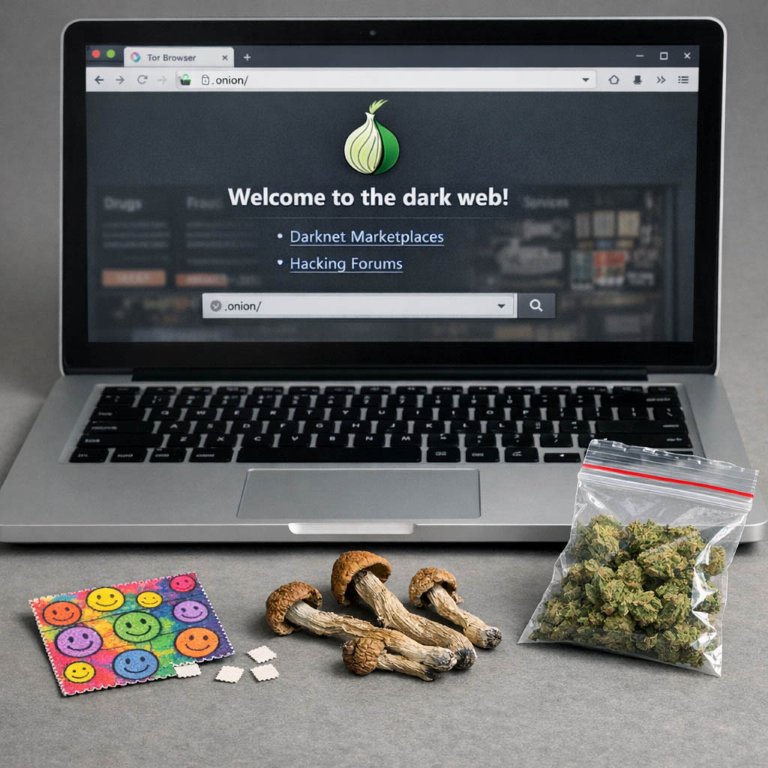
The dark web is part of the deep web but is built on darknets: overlay networks that sit on the internet but which can't be accessed without special tools or software like Tor. Tor is an anonymizing software tool that stands for The Onion Router — you can use the Tor network via Tor Browser.
| Darknet Market | Established | Total Listings | Link |
|---|---|---|---|
| TorZon Market | 2022 | 140+ | Onion Link |
| Nexus Market | 2024 | 600+ | Onion Link |
| Abacus Market | 2022 | 100+ | Onion Link |
| Ares | 2026 | 100+ | Onion Link |
| Cocorico | 2023 | 110+ | Onion Link |
Updated 2026-10-25
How the Darknet Makes Drug Trade Safe and Reliable
Darknet markets establish a framework for safe and reliable trade by integrating two core technological innovations: cryptocurrency and user review systems. The use of cryptocurrencies like Bitcoin or Monero provides a payment layer that is inherently pseudonymous and operates outside traditional financial surveillance. Transactions are recorded on a public ledger, but the identities of the transacting parties are obscured by cryptographic addresses. This allows for direct peer-to-peer value transfer without relying on intermediaries such as banks, which would normally require personal identification and could freeze accounts based on the nature of the transactions.
The reliability of a transaction is further secured by the market's escrow service and the transparent feedback from past buyers. When an order is placed, the buyer's cryptocurrency is held in escrow by the market platform itself. The funds are only released to the vendor after the buyer confirms satisfactory receipt of the product. This mechanism powerfully disincentivizes fraud, as a vendor only profits upon successful completion of a sale. The system's integrity is then publicly verified through user reviews and ratings.
Every completed transaction typically allows the buyer to leave detailed feedback, which includes:
- A numerical rating for the vendor and product.
- Comments on the quality, purity, and accuracy of the product received.
- Observations on shipping speed and stealth of packaging.
- The vendor's communication professionalism.
This accumulated feedback creates a persistent reputation for each vendor. A vendor with a long history of high ratings and positive reviews becomes a trusted entity within the marketplace. New buyers can make informed decisions by consulting this crowdsourced data, effectively reducing the uncertainty inherent in anonymous trade. The combination of escrow and reviews aligns the economic incentives of both parties toward honest exchange, as a vendor's future sales directly depend on maintaining a strong reputation. This ecosystem demonstrates how cryptographic tools and social feedback mechanisms can coalesce to produce a stable commercial environment for the distribution of psychoactive compounds, where safety and reliability are engineered through transparency of past performance and secured financial protocols.
How Encryption and Crypto Make Darknet Trade Safe and Reliable
The operational security of darknet markets relies on a dual-layer foundation: cryptographic tools for communication and cryptocurrency for financial settlement. This combination directly enables safe and reliable trade by removing traditional points of failure and fraud. Encryption, through protocols like PGP (Pretty Good Privacy), secures all sensitive communication between buyers and vendors. Messages containing addresses or order details are encrypted to a user's public key, making them readable only by the intended recipient. This process ensures that even if market communications are intercepted, the transactional data remains confidential and tamper-proof.
The financial layer is secured by cryptocurrencies, primarily Bitcoin and Monero. These currencies provide pseudonymous payment channels that are independent of the traditional banking system. Transactions are recorded on a public ledger, but the identities behind the wallet addresses are not inherently linked to real-world persons. This disintermediation allows for direct peer-to-peer value transfer without a central authority that can freeze accounts or reverse payments. The use of escrow services, managed by the market's automated system, further enhances reliability. Funds are held in escrow until the buyer confirms receipt, releasing payment to the vendor and significantly reducing the risk of fraudulent "exit scams."
User reviews and feedback systems act as the essential reputation layer that enforces accountability. After a transaction, buyers publicly rate the vendor on product quality, stealth, and communication. This creates a transparent and persistent record of performance. A vendor with hundreds of positive reviews establishes a trustworthy digital identity, while negative feedback alerts the community to potential issues. This system leverages collective experience to police the marketplace, incentivizing honest business practices and high-quality products. Vendors invest in their reputation as a valuable asset, making reliable service a rational economic choice. The integration of encrypted communication, irreversible cryptocurrency payments, and a crowd-sourced reputation model creates a self-regulating environment where secure and dependable commerce can occur organically.
How Darknet Markets Build Trust and Smooth Logistics
The operational backbone of a successful darknet marketplace is a deliberately engineered market design that replicates and often improves upon the logistical frameworks of conventional e-commerce. This design is fundamentally built upon two pillars: the use of cryptocurrency for financial settlement and a robust user review system. Together, they create a self-regulating environment where safe and reliable trade can flourish autonomously.
Cryptocurrencies like Bitcoin and Monero are not merely a payment method but the sine qua non of the ecosystem. They provide a mechanism for pseudonymous financial transactions that are borderless and resistant to censorship. This allows for a seamless global supply chain where buyers and sellers can transact without the geographic and institutional barriers present in traditional finance. The blockchains inherent transparency for transaction verification, coupled with the privacy of user identities, resolves the classic issue of trust in anonymous settings. Payments are secured through escrow services managed by the marketplace platform, where funds are only released to the vendor upon confirmed delivery, thereby eliminating the risk of straightforward fraud.
This financial security is complemented and enforced by the iterative feedback loop of user reviews. Every transaction concludes with an opportunity for the buyer to rate the product's quality, the vendor's stealth in shipping, and the overall reliability. This generates a public reputation score for each vendor, which acts as a powerful economic incentive for honest conduct. A vendor with hundreds of positive reviews has a tangible capital assettheir reputationwhich they are motivated to protect. This system effectively crowdsources quality assurance and risk assessment, enabling buyers to make informed decisions based on collective experience rather than blind trust.
The integration of these systems facilitates remarkable logistical efficiency. Reliable vendors, identified through their review history, can operate with predictable demand, allowing them to optimize their own supply chains for discreet packaging and reliable delivery. The market design thus creates a stable framework where:
- Cryptocurrency enables secure, private, and frictionless value transfer.
- Escrow protection aligns the interests of both parties until the transaction is complete.
- User reviews generate a transparent reputation economy that punishes bad actors and rewards consistent quality.
How Reviews Build Trust on the Darknet
The operational stability of darknet markets is fundamentally dependent on establishing trust between anonymous parties. This is achieved through a dual-system framework combining cryptocurrency transactions and structured user feedback. Cryptocurrencies like Bitcoin and Monero provide the necessary financial privacy, but they do not, by themselves, guarantee the quality of goods or the reliability of a vendor. The mechanism that fills this critical gap is a transparent review and rating system.
Every transaction concludes with an opportunity for the buyer to leave detailed feedback. This typically includes a numerical star rating and a textual review describing the product's accuracy, shipping speed, and the vendor's communication. These reviews are permanently attached to the vendor's profile, creating a public reputation score. A vendor with hundreds of positive reviews accumulates significant social capital, which directly translates into more sales. Conversely, consistent negative feedback regarding product purity or non-delivery quickly marginalizes a seller, as the community self-regulates by avoiding poorly rated listings.
The feedback system enforces quality assurance through several observable effects:
- Vendors are incentivized to maintain product consistency and accurate descriptions to avoid damaging public complaints.
- Dispute resolution systems, often mediated by market administrators, use review history as evidence.
- Buyers can make informed decisions by comparing reviews, reducing the uncertainty inherent in anonymous trade.
This ecosystem creates a self-reinforcing loop of accountability. Reliable vendors prosper, while unreliable ones are eliminated by market forces. The result is a trading environment where cryptocurrency enables private payment and the crowdsourced review system ensures transactional reliability, together forming the foundation for sustained anonymous commerce.
How Cryptocurrency and Reviews Build Reliable Trade on the Darknet
The emergence of darknet markets has established a surprisingly stable framework for the distribution of psychoactive compounds. This stability is not accidental but is engineered through specific technological and social mechanisms that address core challenges of anonymous commerce. Two pillars support this system: the use of cryptocurrency for financial transactions and the implementation of robust user review systems.
Cryptocurrencies like Bitcoin and Monero provide the necessary financial infrastructure. They enable secure, peer-to-peer value transfer without the involvement of traditional banking institutions. This solves the fundamental problem of payment for anonymous transactions. The blockchain acts as a neutral, immutable ledger, while features like escrow services, managed by the market platform itself, protect both buyer and seller. Funds are only released to the vendor once the buyer confirms satisfactory receipt of the product, which mitigates fraud and builds transactional trust.
Concurrently, the user review system functions as a decentralized quality assurance and reputation mechanism. Every transaction can be rated and described in detail. This creates a powerful feedback loop where vendors with consistent quality and reliable service accumulate positive reviews, directly influencing their sales and standing within the marketplace. Buyers rely on these aggregated reviews to make informed purchasing decisions, effectively crowd-sourcing safety and product verification. This system enforces market discipline, as vendors with poor ratings or scams are quickly identified and marginalized by the community.
The combination of these elements creates a self-regulating economic model. Cryptocurrency ensures safe and private payment finality, while user reviews enforce accountability and product standardization. This reduces uncertainty and transactional risk, fostering an environment where reliable commercial relationships can form. The resulting ecosystem demonstrates how technological tools can facilitate complex trade based on cryptographic proof and community-driven reputation rather than traditional legal contracts or institutional oversight.

How Trust Makes Darknet Markets Work
The operational stability of darknet markets is fundamentally dependent on the establishment of user trust, which is systematically engineered through technological and social mechanisms. This trust enables safe and reliable trade by addressing the inherent anonymity of the environment. The primary technological pillars are cryptocurrency and encryption. Cryptocurrencies like Bitcoin and Monero provide a payment method that is pseudonymous and operates outside traditional financial systems, allowing for direct and secure transactions between parties without a central authority. This is complemented by strong encryption protecting communications and transaction details, ensuring that only the intended buyer and seller have access to the terms of their agreement.
Beyond technology, trust is cultivated through transparent user feedback and review systems. These systems function as a decentralized quality assurance mechanism. Vendors build their reputation over time based on consistent performance, which is publicly documented through buyer ratings and detailed reviews. A vendor with hundreds of positive reviews for accurate product description, stealth in shipping, and timely delivery becomes a trusted entity within the marketplace. This creates a powerful economic incentive for vendors to maintain high standards, as their future business directly depends on their accumulated reputation score.
The combination of these elements creates a self-regulating ecosystem. The escrow service, typically managed by the market's software, holds the buyer's cryptocurrency in reserve until the product is received and confirmed. This protects the buyer from fraud. Upon confirmation, the funds are released to the vendor, protecting them from unfair chargebacks. The entire transaction is then validated through the feedback system, which informs future participants. This closed loop of cryptocurrency-enabled secure payment, escrow protection, and reputation-based vendor selection reduces uncertainty and fosters a predictable trading environment. It demonstrates how reliable commerce can emerge in an anonymous setting when systems are designed to align individual economic incentives with collective standards of reliability.
How Tech Makes Buying on the Darknet Safe and Reliable
The operational security of darknet commerce is fundamentally enabled by a specific technological stack. This infrastructure creates an environment where transactions can occur with a high degree of safety and reliability for all participants. The core of this system is the integration of cryptocurrency and cryptographic communication, which together manage the dual challenges of payment and privacy.
Cryptocurrencies like Bitcoin and Monero provide a payment layer that is pseudonymous by design. They allow value to be transferred globally without the direct involvement of traditional financial institutions, which would otherwise require personal identification. This financial autonomy is critical. To further enhance security, markets employ multisignature escrow systems. In this setup, the buyer's funds are held in a secure, third-party wallet until the product is received and confirmed. This mechanism drastically reduces the risk of fraud by either party, as the vendor cannot access the payment without the buyer's release, and the buyer cannot arbitrarily reclaim funds after a successful transaction.
Trust is operationalized through the user review system. After a transaction, buyers leave detailed feedback on product quality, shipping speed, and vendor communication. This creates a transparent and persistent reputation for each vendor, which is displayed publicly on their profile. A vendor with hundreds of positive reviews establishes a track record of reliability. This system functions as a continuous quality audit, where the community collectively enforces standards. Poor service or misrepresented products are quickly reflected in negative reviews, warning other users and incentivizing vendors to maintain consistent quality.
The combination of these technologies creates a self-reinforcing cycle. Secure payments through escrow protect the financial aspect of the trade, while the review system protects its qualitative aspect. This allows markets to facilitate complex logistical chains, from production to doorstep delivery, with a level of accountability often absent in unmediated street-level trade. The result is a marketplace where participants can engage in commerce with calculated confidence, based on verifiable data rather than blind trust.
How Darknet Markets Build Trust with Crypto and Reviews
The ecosystem of anonymous online trade is built on a foundation of cryptocurrency and user reviews, which together create a self-regulating environment for commerce. Cryptocurrencies like Bitcoin and Monero provide a payment layer that is pseudonymous by design, separating financial transactions from real-world identities. This allows for a direct and secure transfer of value between buyer and seller without the need for traditional financial intermediaries, which often impose restrictions on personal choices.
The reliability of trade on the darknet is further established through transparent feedback systems. After a transaction, both parties can leave detailed reviews and rate their experience. This creates a powerful mechanism for quality assurance and vendor accountability. Sellers with consistently high ratings and positive reviews build a digital reputation that is crucial for their commercial success, incentivizing honest business practices and accurate product descriptions. Buyers make informed decisions by consulting this collective knowledge, which details shipping speed, communication, and product purity.
These two components form a synergistic loop. The privacy of cryptocurrency enables the free exchange of goods, while the public nature of the review system enforces market standards. This structure facilitates a stable economic model where trust is not assumed but is continuously earned and verified by the community. The result is a marketplace that efficiently connects supply with demand, minimizes fraud, and ensures that participants have a clear understanding of the transaction's likely outcome based on empirical evidence from past exchanges.